
How to Get the Most Out of Your Next Doctor Visit

A little preparation can turn a rushed 15 to 20 minute appointment into a clearer diagnosis, better questions, and a plan you actually understand.
The Mediphant Team
May 11, 2026
Doctor visits move fast. One large study of more than 21 million primary care visits found that the average exam lasted about 18 minutes. Another study found that older adults' primary care visits covered a median of six topics in just 15.7 minutes. That means a lot has to happen quickly: your symptoms, your history, your medications, the exam, the doctor's thinking, the plan, and your questions.
That is why preparation helps. Not because you need to diagnose yourself, and not because your doctor expects a perfect presentation. Preparation simply makes it easier to tell the right story while the clock is moving.
A Pattern Is Worth a Thousand Symptoms
A symptom by itself can be too vague to act on. "I feel dizzy" could mean many things. A more useful version is:
I've had brief spinning dizziness for two weeks. It happens when I turn over in bed or look up. It lasts less than a minute. I haven't fainted, and I don't have chest pain or weakness. I started a new blood pressure medicine last month.
That kind of summary gives your doctor a pattern, and patterns are often where good care begins.
The 18-Second Window
Appointments are not always slow, uninterrupted conversations. A 2022 review found that clinicians interrupted patients after an average of about 18 seconds, while uninterrupted patients usually finished their opening statement in about 46 seconds.
That does not mean doctors are trying to be rude. Often they are clarifying, prioritizing, watching for urgent clues, and trying to protect enough time for the exam and plan. But from the patient side, it is easy to leave thinking, "I never got to the important part."
What to Prepare Before Your Visit
Before your visit, write down a few basics:
- When the problem started
- What makes it better or worse
- What you have already tried
- Your current medications and supplements
- Your top questions
- What you are most worried about
Doctors usually do not need a binder or a self-diagnosis. They need clarity. One especially useful sentence is: "What I'm hoping to leave with today is a plan." That tells the doctor what kind of help you are looking for.
What Makes Visits Harder
There are a few things that can derail even a well-intentioned appointment:
- Saving the big issue for the end. Bringing up your most important concern as you're walking out the door can derail the plan - especially if it's something serious like chest pain, fainting, bleeding, or new weakness.
- "It's all in the chart." Charts are often long, incomplete, or split across systems. Don't assume your doctor has seen everything you think they've seen.
- Not mentioning medication changes. If you stopped a medication, changed the dose, can't afford it, or are worried about side effects - say so. Doctors can work with the truth much better than with a plan that quietly fails at home.
Prepare with Mediphant Insights
This is why Mediphant includes the Insights workflow. Before an appointment, click "Insights" and follow the prompts. It helps you organize the details you are most likely to forget once you are in the room: symptoms, timeline, medications, questions, and goals.
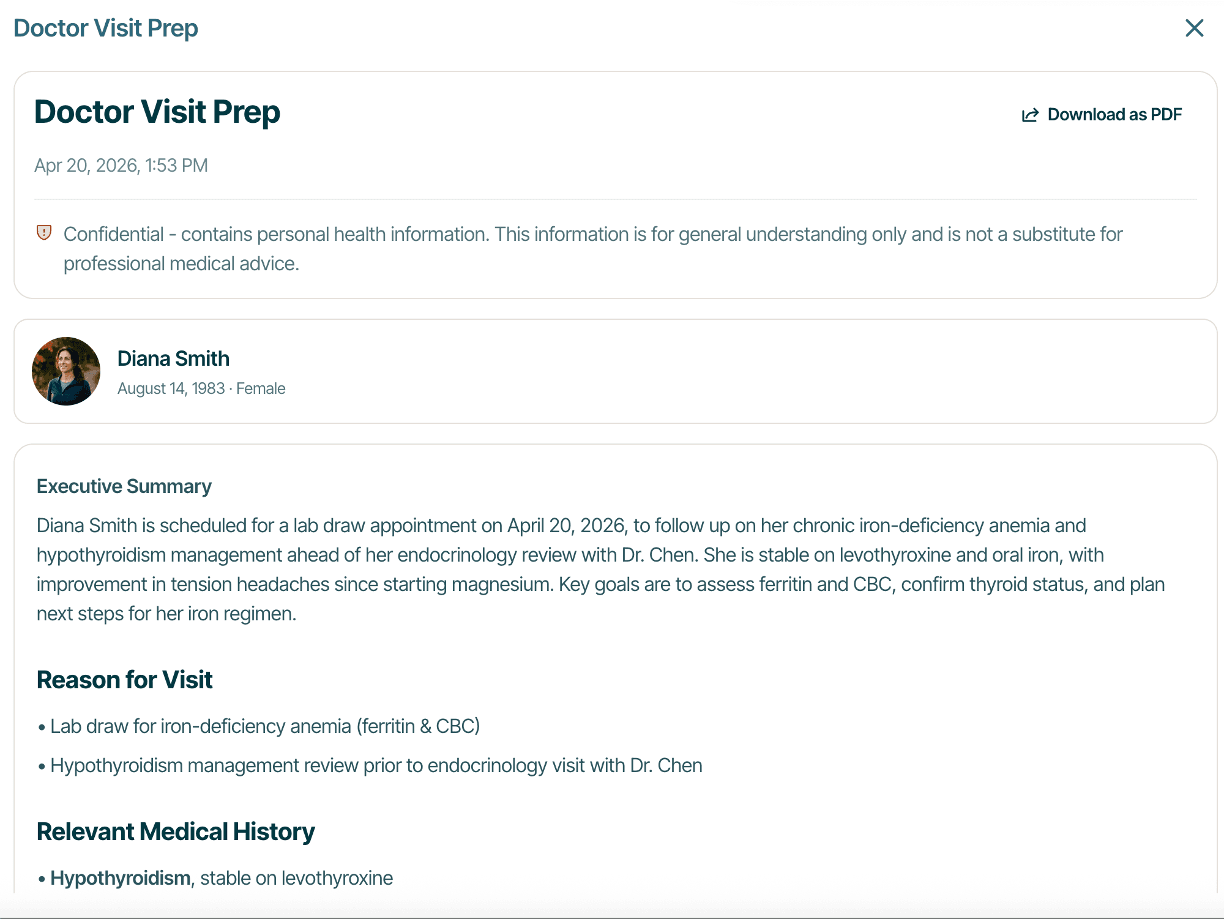
It's like walking into a pop quiz with a cheat code in hand.
Easier to Help
The goal is not to become a difficult patient. The goal is to become easier to help. You bring the lived experience of your body and your daily life; your doctor brings training, judgment, and treatment options. When those two sides meet clearly, a short visit can become a much better one.
Try Mediphant and prepare for your next appointment with Insights.